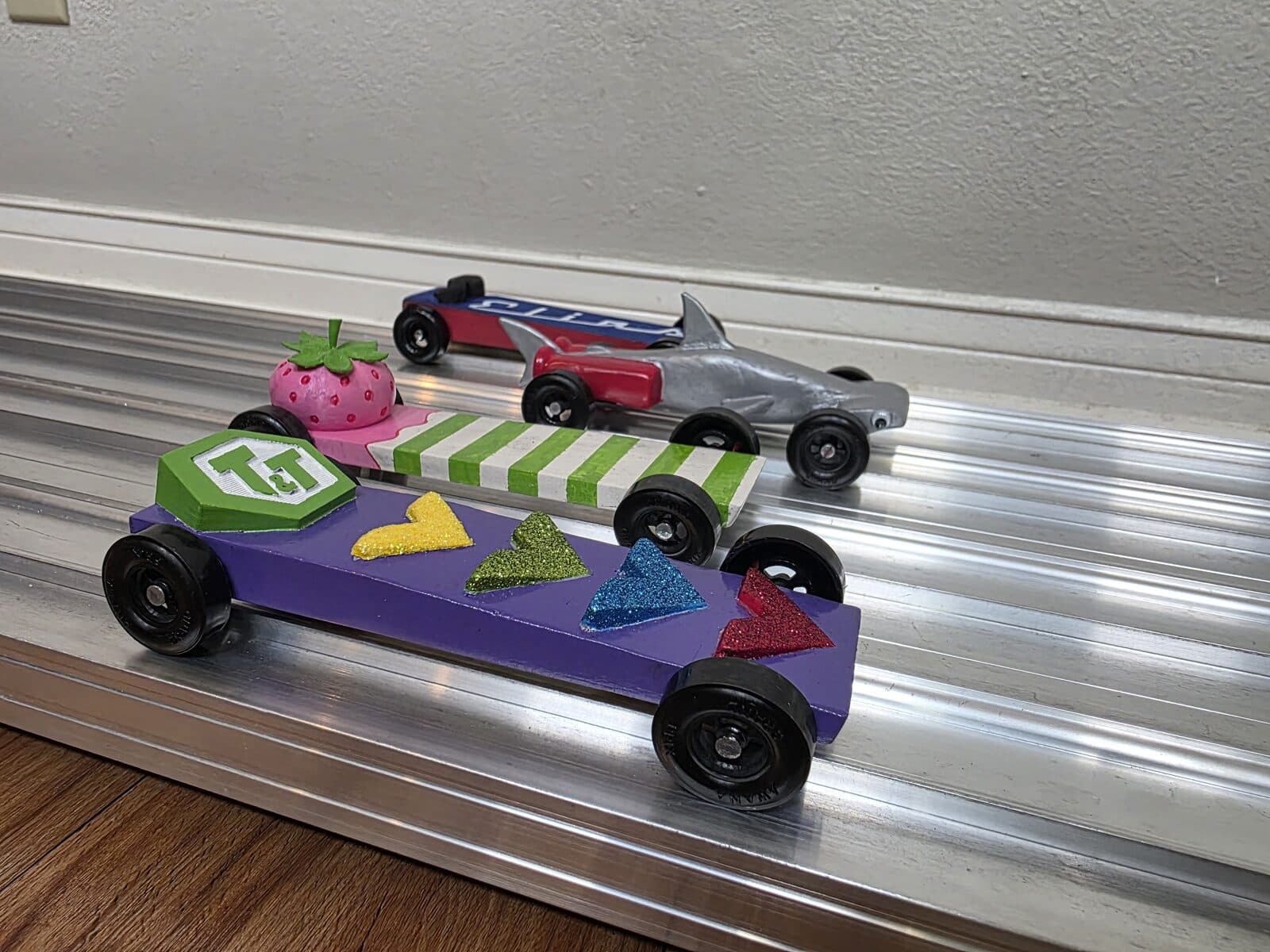
Pinewood derby itself hasn't changed. A kid still gets a kit of pine, plastic wheels, and metal axles. They still spend three weekends with a parent shaping the block, painting it, drilling weight holes. On race day, they still line up at a four-lane track and watch their car roll downhill.
What has changed is everything around the cars. The operational layer — how the race gets registered, scheduled, timed, and shared — looks almost nothing like it did ten years ago. A pack chair from 2015 walking into a 2026 race would recognize the cars instantly and the rest of the room not at all.
This post is a snapshot of that shift. Not a how-to. Just a look at what changed, what didn't, and why.
The 2015 race
In 2015, a typical pack race looked something like this.
A paper signup sheet went out at a pack meeting in January. Parents wrote their kid's name in pencil. Some parents never saw the sheet. Some signed up twice. The race chair maintained the master list on a clipboard, which lived in their kitchen, which was sometimes misplaced.
On race morning, families showed up at the gym and lined up at a check-in table. A volunteer with a digital scale weighed each car, wrote the result on an index card, hand-wrote the car number on the side of the car with a Sharpie, and entered the racer's name into a laptop running spreadsheet software. The laptop was usually plugged into the gym's only working outlet, two extension cords away from where it actually needed to be.
Heats were generated the night before, often by the chair sitting at their kitchen table with a printed schedule and a pencil, manually rotating cars through lanes. The schedule was printed and taped to a wall. Updates during the race were done with a Sharpie on the printout.
If the pack had an electronic timer, times got read off a display and typed into the spreadsheet by a volunteer. If the pack didn't, a judge stood at the finish line and called the order. Parents standing across the gym had no idea who was winning until the chair announced standings between rounds.
Results were shared by email, days later. Photos, if any, came from a parent with a good camera and got circulated through a pack Facebook group whenever they got around to uploading them.
It worked. Kids loved it. Parents had fun. The chair, however, often did not come back the next year.
What changed
A few things, mostly outside of derby itself, made the 2015 model start to feel unnecessarily painful.
Smartphones in every parent's pocket. By the late 2010s, every parent at a pack race had a phone with a camera, a browser, and the ability to fill out a web form in thirty seconds. The paper signup table stopped making sense.
Cheap web tools. Hosting a registration form became free or near-free. Pack chairs stopped writing custom spreadsheets and started using whatever was easiest — Google Forms, SignUpGenius, eventually purpose-built race software.
Electronic timers got cheap and reliable. What used to be a few-hundred-dollar specialty item became standard equipment. Most packs that didn't have a timer in 2015 do now, and most of those timers can push results to a computer over USB or Wi-Fi.
Year-round connectivity expectations. Once parents got used to seeing results on their phone for kids' soccer leagues, school events, and everything else, they started expecting it from pack races too. A race that ended without parents being able to text a result to grandma started feeling like an oversight, not a tradition.
Volunteer burnout became a real conversation. Pack chairs started dropping out, publicly, citing time and stress. Council leadership took notice. Tooling that reduced the chair's workload became something packs actively recruited for, not just nice-to- have.
The 2026 race
A typical 2026 pack race looks like this.
A registration link goes out by email four to six weeks before race day. Parents sign up from their phone, upload a photo of the car, and the chair sees racer counts climb in real time. No paper.
Check-in on race morning is weigh-in and inspection, not data entry. The list of who's racing is already in the system. A volunteer with a tablet confirms the car against the registration, weighs it, photographs it, and sends the family to impound.
Heats are generated by software, usually using a rotation pattern like Perfect-N or Stearns. The schedule is on a tablet at the operator's station. Updates happen automatically.
Times come from a timer plugged into a small bridge — often just a Wi-Fi-enabled adapter — and flow into the race software without anyone typing. If the timer fails, the software falls back to manual entry and the race keeps running.
A TV at the back of the gym shows live standings. Parents who couldn't make it watch from home on their phones. Results publish the moment the last heat finishes. Photos upload by helpers during the day and organize into per-racer galleries that parents can share with relatives by tapping a button.
The chair, instead of being the most stressed person in the room, is mostly available to talk to parents, take photos, and watch the awards ceremony they organized.
What hasn't changed
The kids haven't. The cars haven't. The parents who stay up late helping a seven-year- old drill weight holes haven't. The slow-build excitement of a January workshop, the sanding and painting and re-sanding, the moment when a car finally rolls true — none of that is different.
What's different is everything that used to compete with that moment for the chair's attention. The clipboard, the spreadsheet, the Sharpie on the printed schedule. Those have been quietly replaced by something that handles itself.
That's the whole shift. Not a revolution in pinewood derby. Just a removal of friction around the part that always mattered.
Running your race this season? Grab the free planning checklist → — a phase-by-phase guide for first-time pack chairs.