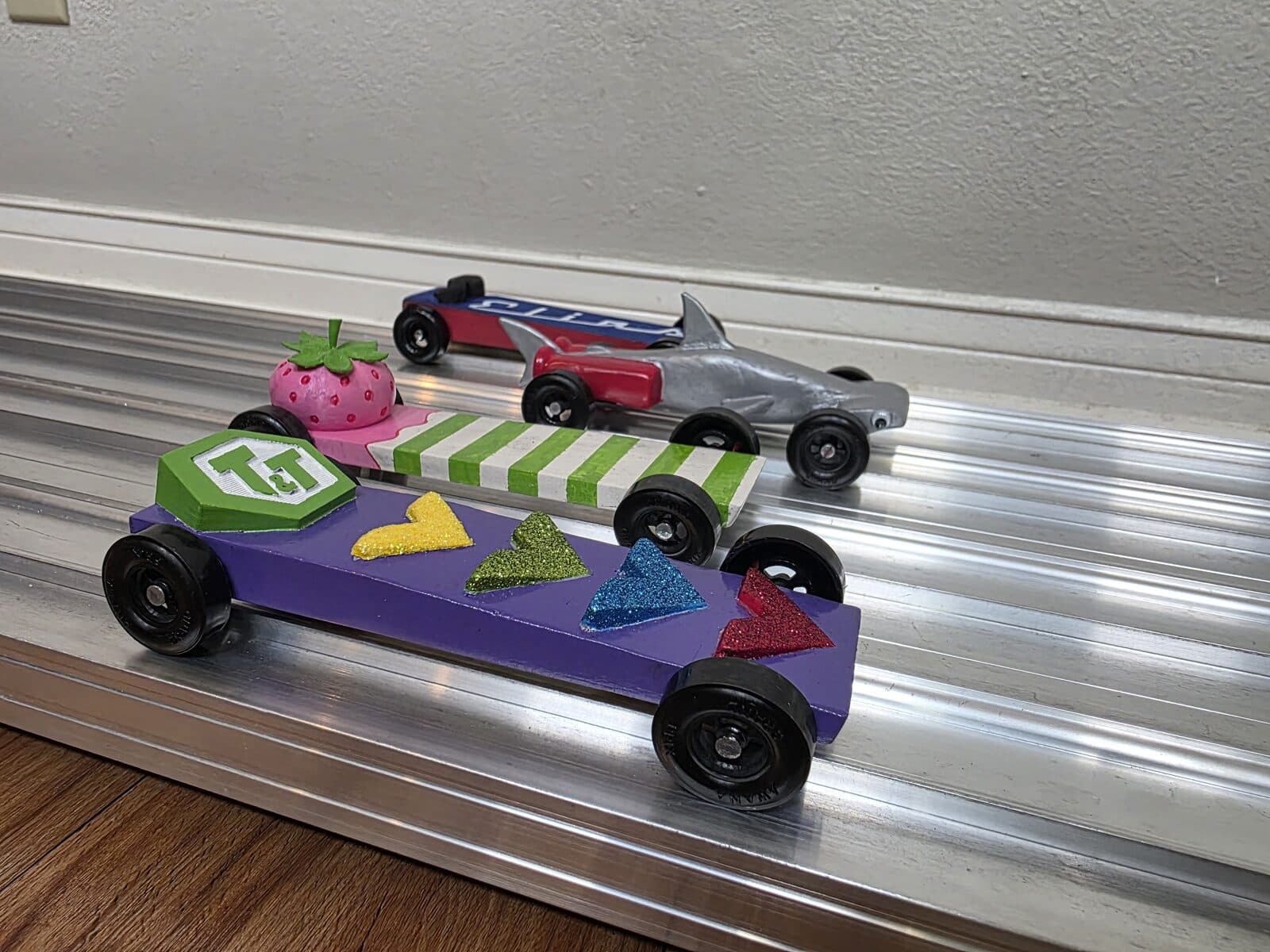
If this is your first year running the pack's pinewood derby, here is the part nobody tells you: the race itself is the easy part. The cars roll downhill. Gravity does most of the work. The hard part is everything that happens in the weeks and months before — the decisions, the logistics, the small details that, if missed, turn into a long Saturday.
This checklist walks you through it. Not by week — every pack plans on a different timeline, and some chairs start a year out — but by phase. Foundation, setup, final prep, race day, after. Work through each phase at your own pace.
Free download: Grab the printable multi-page version of this checklist as a PDF. Tape it to the fridge, share it with your co-chair, mark items off as you go. Get the checklist PDF →
Phase 1: Foundation
This is the part you do first, and the part everything else depends on. You can't book volunteers until you have a date. You can't print rules until you know your weight limit. You can't promote anything until you have a venue.
The foundation phase is about answering four questions: when, where, how much, and who's helping you decide.
Pick a date. Avoid the same weekend as the school play, the district pinewood derby, or any major holiday. Saturday mornings are traditional for a reason — most families are free, and you have all day to clean up if you run long.
Lock the venue. Most packs run in their charter organization's gym, fellowship hall, or cafeteria. Get the booking in writing. Confirm what time you can start setting up the night before, and what time you have to be cleared out by Sunday morning.
Set a budget. Even a small race has costs: awards, food, decorations, printing, the occasional replacement axle. Write the number down before you start spending.
Identify your co-chair. Running this solo is possible but exhausting. One other adult who shares the load — even just emotionally — makes a huge difference.
Phase 2: Setup
With the foundation locked, the setup phase is where the race takes shape. This is where you write the rules, open registration, sort out the track, and decide what the day actually looks like.
Write the rules. Use your council's standard rules as a starting point — almost every council publishes one. Decide on weight limit (5 ounces is standard), wheel and axle restrictions, lubricant rules, and how disqualifications are handled. Publish the rules before registration opens so parents can build to spec.
Plan the race format. Will you race by den, by age, or as one big field? Will you run a double-elimination bracket, a points-based heat rotation, or something else? For first-time chairs, a points-based rotation is the simplest — every car races in every lane, low total time wins.
Confirm your track and timer. If the pack owns one, inspect it now, not the day before. Make sure the track sections fit together, the lanes are straight, and the timer powers on. If you're borrowing one from another pack, schedule pickup at least a week before race day.
Open registration. Pre-registration is the single biggest stress-reducer on race day. The more families who sign up before they show up, the less chaos at check-in.
Order awards. Trophies, ribbons, medals — whatever your tradition is. Order early. Engraving turnaround can be slow.
Phase 3: Final prep
Final prep is the part where everything you set up earlier turns into a plan. Volunteers know what they're doing. Parents know what to bring. The food situation is handled. The schedule is printed.
Recruit volunteers. You need: check-in helpers (2–3), track operator (1), heat caller (1), runner/announcer (1), photographer (1, optional), and someone on cleanup. That's six to eight adults for a smooth race. Don't try to do it with three.
Confirm food. Whether it's potluck, pizza, or a hot-dog grill, decide who's bringing what and when it shows up. Hungry kids and hungry parents are not your friends mid-race.
Send a parent reminder. One week out, send a single email or message with: arrival time, weigh-in window, what to bring, what NOT to bring (extra weights, lubricants outside the rules), and a parking note if needed. One message. Not five.
Print the schedule. Even if you're running heats from a tablet, print one large copy of the day's schedule and tape it somewhere everyone can see. Parents will ask. A lot.
Prep the awards table. Lay out trophies and ribbons in advance so the awards ceremony isn't a scramble.
Phase 4: Race day
Race day is when planning meets reality. If the previous phases went well, this phase mostly runs itself — you're a conductor, not a firefighter.
Arrive early. Two hours before the first heat is not too much. You will discover at least one small problem (a missing extension cord, a sticky lane) that you'll be glad you had time to fix.
Run check-in. Weigh-in, inspection, photo, lane assignment confirmation. Have a digital scale, a calibration weight, and a clear "impound" area for inspected cars. Once a car is inspected and impounded, it does not get touched again until it races.
Start on time. The single biggest morale killer at a pack race is a 45-minute delay at the start. Even if not every car is checked in, start the first heat at the published time. Late arrivals can be slotted in later.
Run the heats. Stay calm at the operator station. Announce results between heats. Let the kids cheer. If the timer fails, you fall back to manual entry — note the finish order, keep running.
Run the awards. Hand out trophies for the speed places (1st, 2nd, 3rd, often by den), plus the design awards (best paint, most creative, judge's choice). Take photos.
Phase 5: After
The race ends but the chair's job has a tail. The faster you handle the post-race tasks, the cleaner the handoff to next year.
Publish results. Send the final standings to parents the same day if you can. Memories fade fast.
Share photos. Whoever shot them, get them organized and shared. Parents will ask.
Clean up. Get the venue back to the state you found it. Your charter org will remember.
Debrief. Write down what went well, what didn't, and what you'd change. Future you (or next year's chair) will thank present you.
Archive everything. Rules, schedule, volunteer list, results, photos. One folder. Somewhere you'll find it next October.
The full checklist, as a printable PDF
The on-page version above covers the shape of every phase. The downloadable PDF expands it into a full multi-page checklist — every item, with a one-line note on why it matters, in a format you can print, mark up, and pass to your co-chair.
Download the planning checklist PDF →
Running your first race is a lot. But it's also one of the most rewarding things a pack volunteer gets to do. A kid who works on a car for weeks, lines up at the track, and watches that car run — that moment is what every one of these checklist items is in service of.
Plan well, and the rest takes care of itself.